
Most modern hockey jerseys are made from 100% polyester. Polyester works well for hockey because it is relatively lightweight, dries quickly, holds its shape and supports full-color dye sublimation. However, 100% polyester is only the beginning of the answer because different polyester fabrics can produce very different jerseys.
A lightweight recreational jersey and a more game-oriented jersey may both carry exactly the same 100% polyester label. The difference comes from fabric weight, surface texture and knitted structure. Understanding these factors helps teams choose a fabric based on how the jersey will actually be used instead of relying on the fiber content alone.
What Are Hockey Jerseys Usually Made Of?
The short answer is that most hockey jerseys are made from knitted polyester fabric. Modern manufacturers use polyester instead of traditional wool or cotton because it is easier to maintain and better suited to sports uniforms. It also provides a practical surface for adding team colors, logos, names and numbers.
The precise type of polyester fabric varies between manufacturers and product levels. Some fabrics are lighter and have more visible openings, while others are heavier and have a finer, denser texture. This is why asking only whether a jersey is polyester does not provide enough information for a team order.
Why Is Polyester Used for Hockey Jerseys?
Hockey jerseys are worn over shoulder pads, elbow pads and other protective equipment. They need to allow movement while coping with repeated practices, games and washing. Polyester provides a useful balance of weight, shape retention, drying speed and ease of customization.
Polyester also absorbs less water than cotton, so it generally dries more quickly and is less likely to become heavy with moisture. Its performance still depends on the way the yarn is knitted and whether the fabric has received any additional finishing treatment. Therefore, a polyester label alone does not guarantee that every jersey will have the same ventilation or moisture-management performance.
Another major advantage is compatibility with dye sublimation. During sublimation, the design is transferred into the polyester fibers instead of being printed as a heavy layer on the fabric surface. This allows teams to create full-color jerseys with logos, gradients, player names and numbers without making the printed areas noticeably thicker.
Why Is “100% Polyester” Not the Complete Answer?
Polyester describes what the fiber is made from, but it does not describe the complete fabric. The same fiber can be knitted into fabrics with different weights, openings and surface textures. As a result, two 100% polyester jerseys may feel and look noticeably different.
One jersey may feel light and relaxed, while another may feel more substantial and suitable for competition. Neither option is automatically better for every team because the right choice depends on the intended use. Fabric weight and structure should therefore be considered together with the team’s budget, design and preferred feel.
When comparing fabrics, teams should look at four basic details:
Fiber content
Fabric weight in GSM
Surface texture and openness
Intended use of the finished jersey
These details are easier to understand and more useful than a long list of technical fabric names. They also make it easier to compare quotations from different suppliers. Most importantly, they help prevent unexpected differences after the complete order has already been produced.
Three Polyester Fabrics We Commonly Use
The following three fabrics are examples of the options commonly used in our custom hockey jersey production. All three are made from 100% polyester and can be used for dye sublimation. Their main differences are weight, visible texture and product positioning.
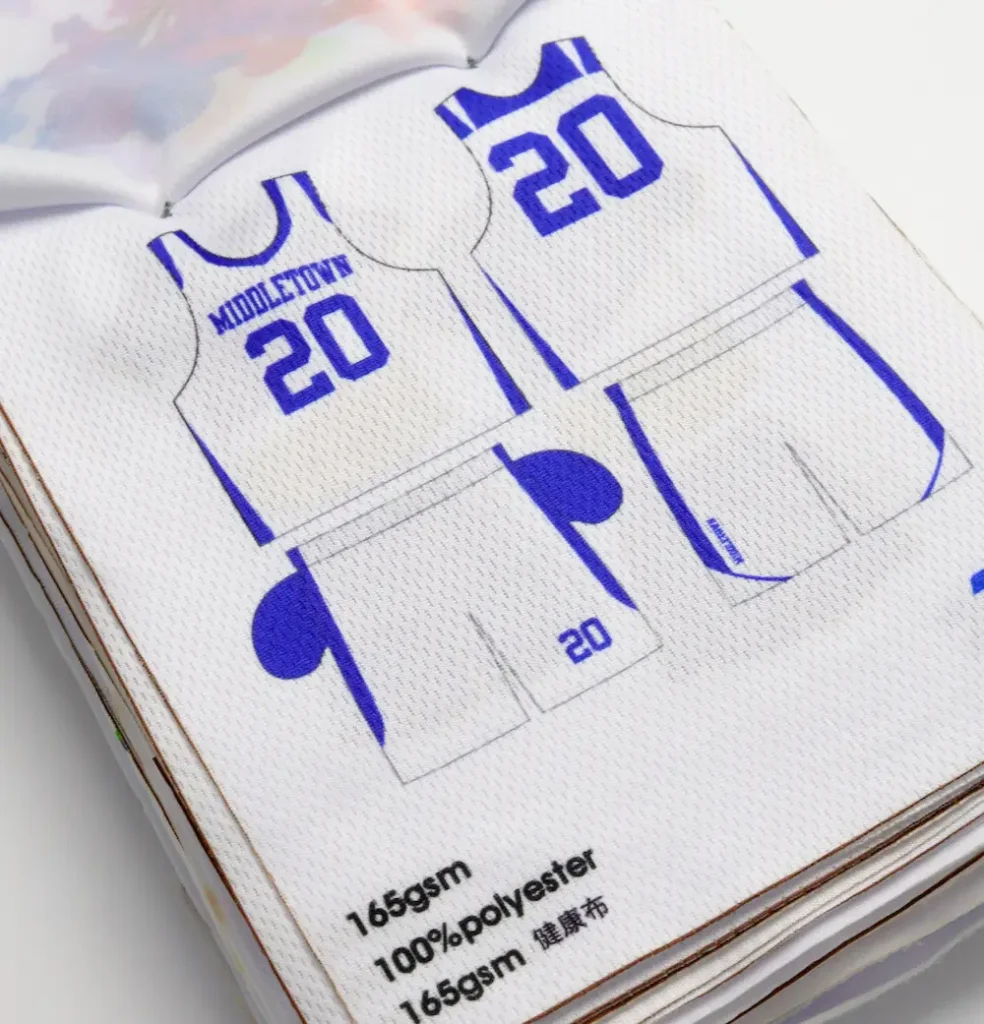
165gsm Lightweight Polyester Fabric
The 165gsm option is the lightest of the three fabrics. It has a visible mesh texture and produces a lighter, more relaxed jersey. We generally position it for recreational wear, fan jerseys and projects where lower weight and budget are more important than a competition-oriented feel.
This does not mean that every 165gsm polyester fabric performs identically. The actual hand feel and appearance still need to be confirmed using the selected fabric and finished sample. For teams wanting an affordable and lightweight jersey, however, it provides a practical starting point.
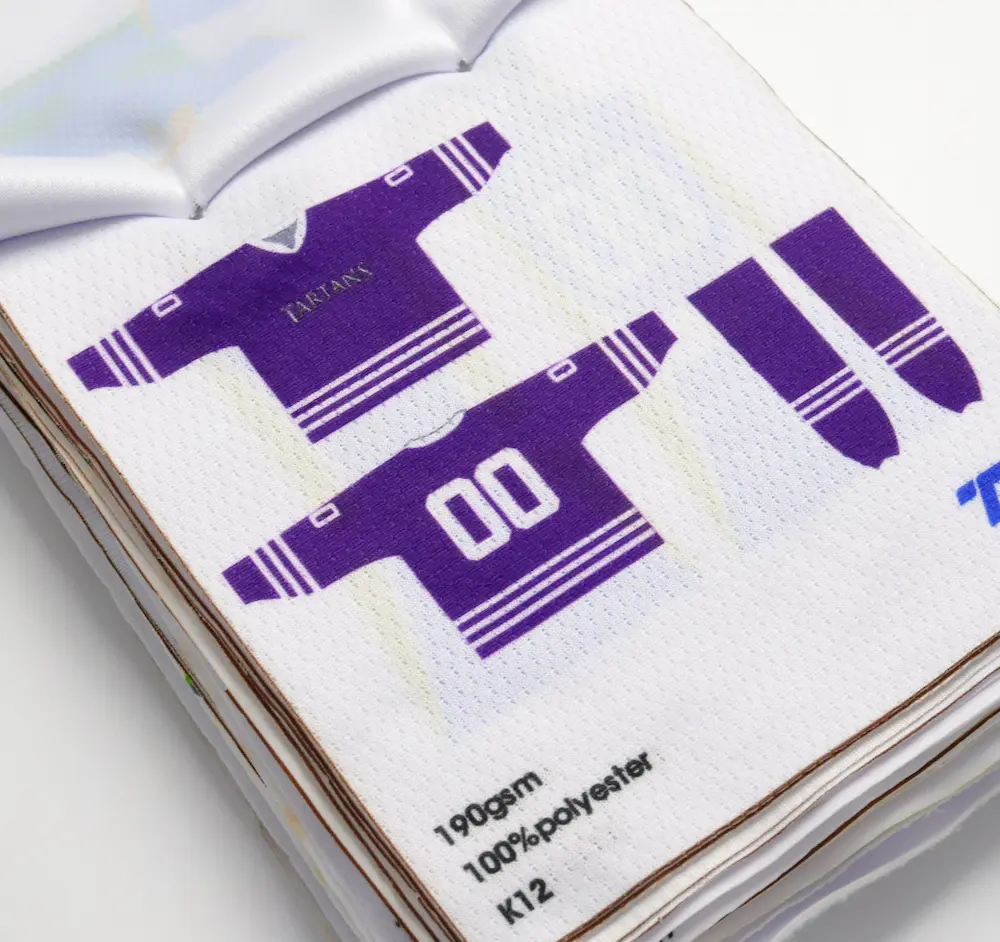
190gsm K12 Polyester Fabric
The 190gsm K12 option is more game-oriented than the 165gsm fabric. It provides more substance while retaining a visibly open sports-fabric texture. For teams seeking a jersey that feels more appropriate for regular play and competition, K12 offers a balanced middle option.
K12 is a supplier fabric name rather than a universal international specification. Other manufacturers may offer K12 fabrics at different weights, so the GSM should always be confirmed instead of relying on the name alone. In our comparison, K12 specifically refers to the 190gsm, 100% polyester fabric shown in our fabric card.
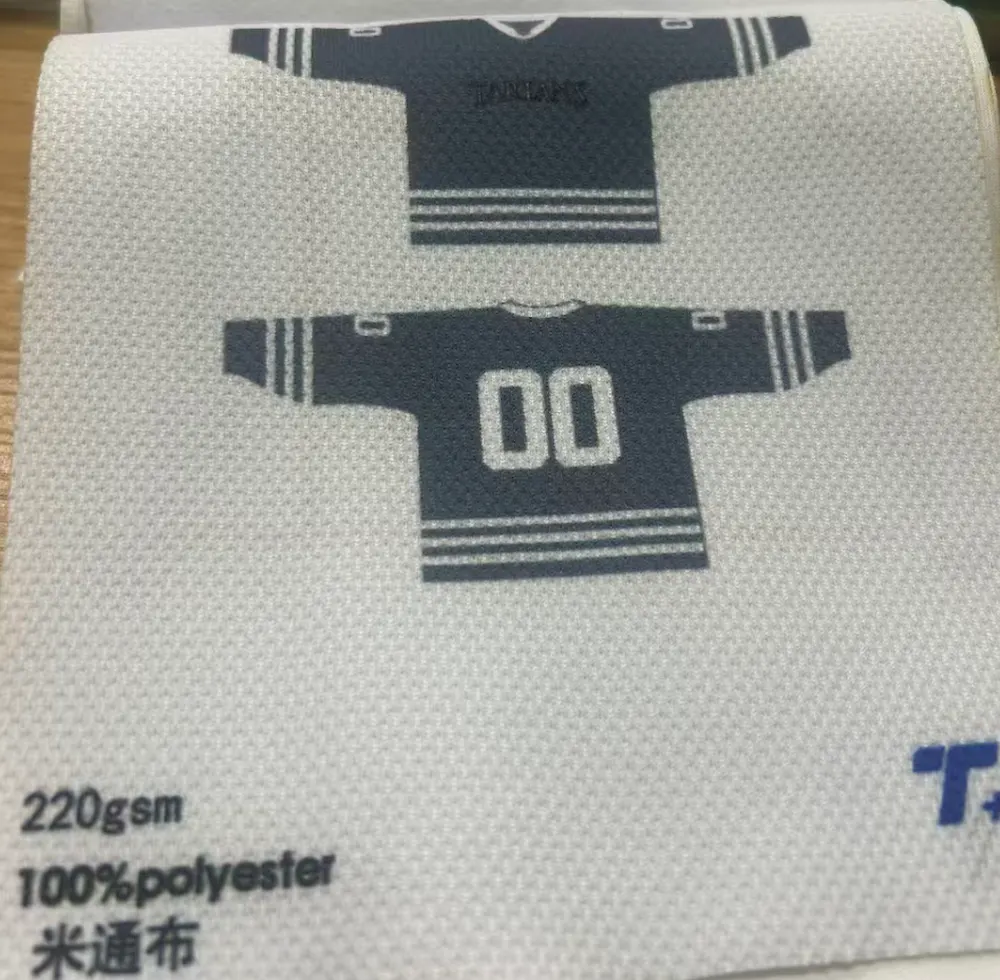
220gsm Mi Tong Textured Polyester Fabric
The 220gsm Mi Tong fabric is the heaviest of the three options. Its surface texture appears finer and denser, giving the material a more substantial visual presentation. It is suitable for custom projects that prioritize a heavier hand feel, a refined surface and a more structured overall appearance.
Mi Tong is a supplier-side fabric name that may not be familiar to overseas buyers. For that reason, we describe it to customers by its verified composition, weight and visible texture instead of depending only on the Chinese fabric name. A fabric card or finished sample provides a much clearer comparison than the name itself.
What Does GSM Mean?
GSM means grams per square metre, which measures how much one square metre of fabric weighs. It does not measure the total weight of the completed jersey because different sizes and constructions use different amounts of fabric. It also does not prove overall quality on its own.
A 220gsm fabric contains more material per square metre than a 165gsm fabric, but this does not automatically mean it is the best choice for every team. A lighter fabric may be preferred when freedom of movement, lower weight or a more relaxed feel matters most. A heavier fabric may be preferred when the customer wants more substance, coverage and a denser-looking surface.
The important point is to use GSM as one part of the decision rather than as a quality ranking. Fabric structure, stitching, sizing, printing and overall construction also affect the finished jersey. Teams should compare the complete product rather than choosing solely by the highest number.
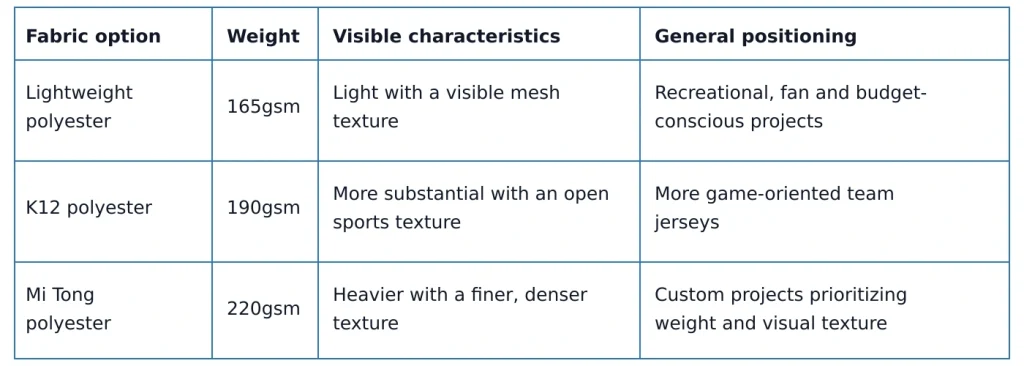
How Should a Team Choose Between the Three Fabrics?
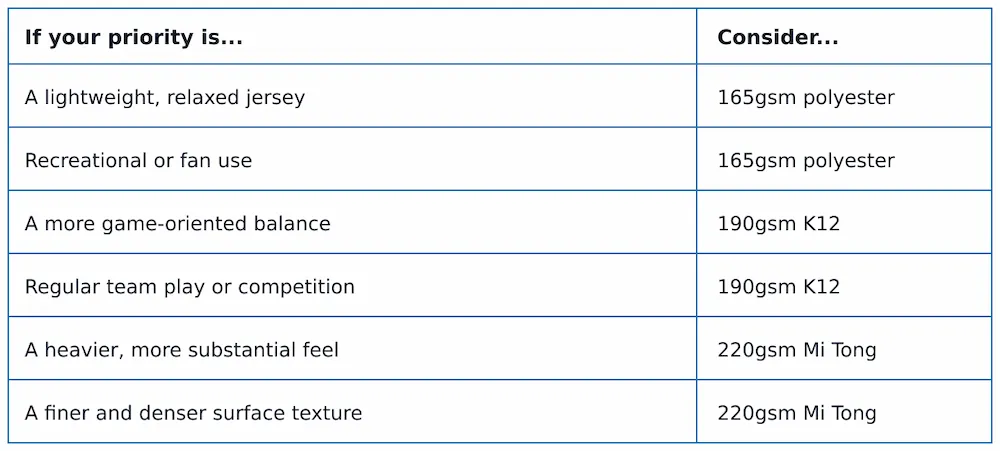
The easiest way to choose is to begin with the intended use of the jersey. A recreational team, supporter group and competitive team may all value different characteristics. The right fabric is the one that fits the real wearing situation and budget.
This table should be treated as a practical starting point rather than an absolute rule. Design, quantity, decoration and player preference can change the final recommendation. When a team is uncertain, comparing fabric cards or approving one finished sample is safer than deciding from a written description alone.
Are All Three Fabrics Suitable for Sublimation?
Yes, all three fabrics are made from 100% polyester and are suitable for dye sublimation. Full-color designs, team logos, gradients, names and numbers can be transferred into the fabric. The process creates a smooth result because it does not add a separate, heavy print layer to the jersey surface.
The visible result may still differ slightly because the three fabrics do not have identical surface textures. Fine lines, small text and light-colored areas can appear different on an open texture and a finer, denser texture. If those details are important to the design, they should be checked on an actual printed fabric or finished sample.
Sublimation compatibility does not mean that the fabric alone determines the final quality. Artwork resolution, color settings, printing control and production consistency also matter. A good supplier should check both the fabric and the artwork before bulk production begins.
What Should Teams Confirm Before Bulk Production?
Before placing a team order, ask the supplier to confirm the polyester content, GSM and exact fabric option in writing. Request a clear fabric-card photograph or physical swatch so that the surface texture can be seen. If the order is important or the team is changing suppliers, approve a finished sample before authorizing bulk production.
The sample should be used to check more than the fabric. Teams should also review the jersey measurements, fit over protective equipment, colors, Logo placement, player names, numbers and stitching. This single approval step can prevent a small misunderstanding from being repeated across the entire roster.